Breaking Stereotypes: What are the Wrong Assumptions About Visually Impaired Person
Blindness is often misunderstood—not as a different way of experiencing life, but as a deficit. Yet for millions of blind individuals around the world, life is not defined by what they lack, but by what they build: careers, families, art, advocacy, and joy. This article reframes blindness not as limitation, but as a powerful lens through which courage, ingenuity, and possibility are redefined.
Living Fully Without Sight
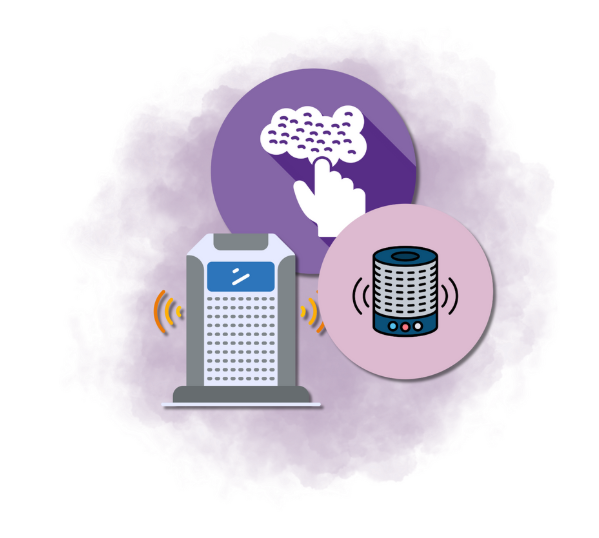
Blind individuals live full, dynamic lives. They travel, teach, parent, perform, and lead. Technologies like screen readers, Braille displays, and voice-controlled devices have expanded access to education, employment, and entertainment (American Foundation for the Blind, n.d.). But beyond tools, it’s mindset and community that fuel independence.
Blindness doesn’t mean passivity—it often demands active problem-solving, resilience, and creativity. Whether navigating a crowded street or managing a business, blind individuals demonstrate that life without sight is still life with agency.
Breaking Stereotypes
Stereotypes about blindness persist: that blind people are helpless, dependent, or incapable of complex tasks. These myths are not only false—they’re harmful. They limit opportunities, reinforce exclusion, and ignore the achievements of blind professionals, athletes, and artists.
Take Haben Girma, the first deafblind graduate of Harvard Law School, who now advocates globally for disability rights. Or Erik Weihenmayer, the first blind person to summit Mount Everest. Their stories—and countless others—prove that blindness is not a barrier to excellence, but a different path to it (Girma, 2020; Weihenmayer, 2017).
Redefining Possibility
Blindness invites us to rethink how we define success, intelligence, and beauty. It challenges sighted norms and expands our understanding of perception. Blind individuals often develop heightened sensitivity to sound, touch, and emotion—skills that enrich relationships, art, and leadership.
Inclusive design, adaptive education, and accessible technology are not just accommodations—they’re innovations that benefit everyone. When we design with blind users in mind, we create systems that are more intuitive, flexible, and humane.
Just Life, No Limits
To live without sight is not to live without joy, ambition, or meaning. Blind individuals are not waiting to be “fixed”—they are living, thriving, and contributing. Their lives remind us that barriers are often built by attitudes, not impairments.
By listening to their stories, amplifying their voices, and removing systemic obstacles, we move closer to a world where disability is not a disadvantage—but a dimension of human diversity.
Conclusion
Blindness is not a flaw to be pitied—it’s a facet of human diversity that reveals strength, creativity, and depth. When we dismantle stereotypes and challenge assumptions, we begin to see blind individuals not through the lens of limitation, but through the truth of their lived experience: vibrant, capable, and whole.
Their lives are not defined by what they cannot see, but by what they *do*—the relationships they build, the barriers they break, and the wisdom they share. From everyday routines to extraordinary achievements, blind individuals show us that perception is more than vision—it’s insight, resilience, and connection.
To truly honor their stories, we must shift our gaze from sympathy to solidarity. Because when we stop underestimating, we start understanding. And in that understanding, we create a world where blindness is not a boundary—but a bridge to broader, more inclusive ways of living.
References
American Foundation for the Blind. (n.d.). Technology resources for people who are blind or visually impaired. https://www.afb.org/blindness-and-low-vision/using-technology
Girma, H. (2020). Haben: The deafblind woman who conquered Harvard Law. Twelve.
Weihenmayer, E. (2017). No barriers: A blind man’s journey to kayak the Grand Canyon. Thomas Dunne Books.

Leave a Reply