How to Be a Thoughtful Ally to the Blind?
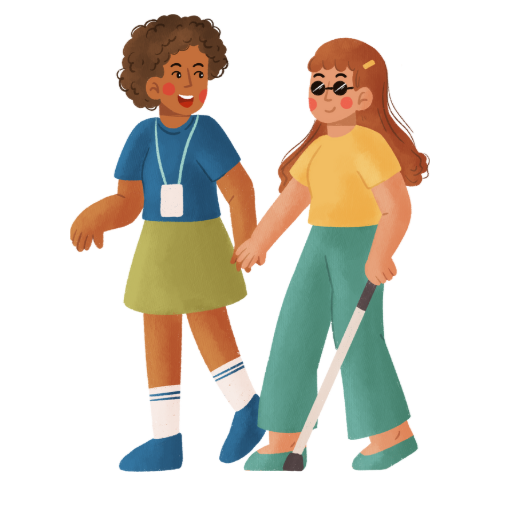
Friendship is built on trust, respect, and shared experience—not on sight. Yet when one friend is blind, social dynamics can shift in subtle ways. Well-meaning allies may over-assist, under-include, or make assumptions that unintentionally diminish autonomy. Being a thoughtful ally means learning to support without overshadowing, include without patronizing, and listen without presuming.
This article explores how friends, peers, and companions can foster genuine, respectful relationships with blind individuals—rooted in empathy, awareness, and mutual growth.
Allyship Begins with Listening
The most powerful support starts with asking, not assuming. Blind individuals have diverse preferences, personalities, and experiences. Some may welcome help crossing a street; others may prefer to navigate independently. Thoughtful allies ask questions like:
- “Would you like help with this?”
- “How do you prefer to receive information?”
- “Is there anything I can do to make this space more accessible?”
This approach affirms autonomy and avoids the trap of “helping without consent” (National Federation of the Blind, n.d.).
Unlearning Assumptions
1. Blindness ≠ Incompetence
Avoid assuming that blindness limits intelligence, humor, or capability. Blind individuals are lawyers, parents, gamers, dancers, and friends. Treat them as whole people—not as inspirational symbols or fragile beings (Young, 2014).
2. Not All Blindness Is the Same
Some blind individuals have light perception or partial vision. Others use mobility aids, screen readers, or Braille. Respect individual differences and avoid generalizing.
3. Social Inclusion Matters
Blind individuals may be unintentionally excluded from group activities—especially those reliant on visual cues. Thoughtful allies adapt games, describe visual moments, and ensure blind friends are part of the experience without making them feel singled out (American Foundation for the Blind, n.d.).
Communication with Care
- Use names when speaking in groups so blind friends know who’s talking.
- Describe visual events naturally, without overexplaining.
- Avoid vague gestures like “over there”—use clear, spatial language.
- Respect boundaries—don’t touch mobility aids or guide without permission.
These small shifts build trust and comfort in everyday interactions.
Friendship as Mutual Growth
Being an ally isn’t about being perfect—it’s about being present. Blind individuals often teach sighted friends new ways of perceiving, problem-solving, and connecting. In turn, allies offer access, advocacy, and emotional support.
As Haben Girma (2020) writes, “True inclusion means recognizing that disabled people bring value—not despite our differences, but because of them.”
Conclusion
Being a thoughtful ally to blind friends isn’t about mastering a checklist—it’s about cultivating a relationship grounded in respect, curiosity, and care. It means showing up with humility, asking instead of assuming, and embracing the richness that comes from seeing the world through different lenses.
True allyship is not about fixing—it’s about connecting. It’s about recognizing that blindness is one aspect of a person’s identity, not a limitation. When we listen deeply, communicate clearly, and include intentionally, we build friendships that honor autonomy and celebrate difference.
In the end, thoughtful allyship isn’t just support—it’s solidarity. And that makes all the difference.
🧾 References
American Foundation for the Blind. (n.d.). Social interactions and etiquette. https://www.afb.org/blindness-and-low-vision/living-blindness/social-interactions-and-etiquette
Girma, H. (2020). Haben: The deafblind woman who conquered Harvard Law. Twelve.
National Federation of the Blind. (n.d.). Blindness terminology and respectful language. https://www.nfb.org/resources/blindness-terminology
Young, S. (2014, April). I’m not your inspiration, thank you very much. TEDxSydney. https://www.ted.com/talks/stella_young_i_m_not_your_inspiration_thank_you_very_much

Leave a Reply