
Informed Decisions and Conversation: Listening, Learning, and Advocating with Blind Communities
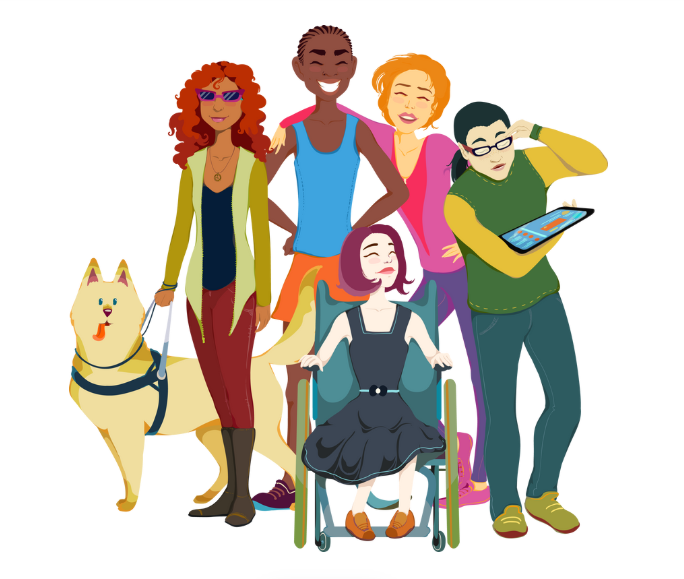
Inclusion begins with listening—but it flourishes when those being heard are also leading the conversation. For blind communities, advocacy is most powerful when it’s not about them, but with them. Too often, decisions about accessibility, education, and public policy are made without consulting those who live the reality of blindness every day.
This article explores how individuals, institutions, and communities can move beyond symbolic inclusion to meaningful collaboration—where blind voices are not just acknowledged, but centered.
Listening with Intent
Listening is more than hearing—it’s about understanding context, validating experience, and being open to change. Blind individuals often express frustration when their insights are dismissed or tokenized. As disability scholar Rosemarie Garland-Thomson (2017) argues, “The disabled voice must be recognized not as marginal, but as central to the human experience.”
Action Tip: In meetings, classrooms, and design sessions, invite blind participants to lead discussions on accessibility. Avoid assuming their needs—ask, listen, and adapt.
Learning from Lived Experience
Blindness is not a monolith. Some individuals are blind from birth; others lose sight later in life. Some use Braille, others rely on screen readers or tactile cues. Learning from this diversity requires humility and curiosity.
A study by the National Center on Disability and Journalism (2021) emphasizes that inclusive storytelling must reflect the complexity of disabled lives—not just their challenges, but their agency, humor, and achievements.
Action Tip: Read blogs, attend webinars, and follow blind creators and advocates. Learning directly from lived experience builds empathy and dismantles stereotypes.
As an Active not Passive Advocate
Advocacy is most effective when blind individuals shape the agenda. Allies can amplify voices, but should never speak over them. Whether in policy reform, media representation, or community planning, blind leadership ensures that solutions are relevant and respectful.
The Disability Rights Fund (2022) highlights the importance of “nothing about us without us”—a principle that demands disabled people be at the center of decisions that affect their lives.
Action Tip: Support blind-led organizations. When advocating for change, cite blind voices and defer to their expertise.
Institutional Change
Schools, workplaces, and governments must move beyond compliance to co-creation. Accessibility should not be a checklist—it should be a conversation. When blind individuals are part of planning, design, and evaluation, systems become more equitable and effective.
The World Bank (2023) notes that inclusive development is impossible without the active participation of disabled communities. Their insights improve infrastructure, education, and social cohesion.
Action Tip: Encourage institutions to include blind consultants, educators, and leaders in strategic planning. Representation must be structural, not symbolic.
Conclusion
True inclusion is not built on good intentions alone—it’s built on shared leadership, lived experience, and the courage to listen with humility. Blind communities have long been experts in adaptation, innovation, and advocacy. Their voices carry not just insight, but solutions. When we center those voices—in classrooms, boardrooms, and policy tables—we move from symbolic gestures to structural change.
To support blind individuals is to walk beside them, not ahead of them. It means learning from their stories, deferring to their expertise, and co-creating systems that reflect their realities. Inclusion is not a favor—it’s a responsibility. And when blind communities lead, everyone benefits.
Therefore, let us build a world where decisions are not made about blind individuals, but with them—where conversation becomes collaboration, and advocacy becomes transformation. That is the power of informed decisions. That is the promise of true inclusion.
References
Disability Rights Fund. (2022). Nothing about us without us: Inclusive advocacy principles. https://disabilityrightsfund.org/inclusive-advocacy/
Garland-Thomson, R. (2017). Extraordinary bodies: Figuring physical disability in American culture and literature. Columbia University Press.
National Center on Disability and Journalism. (2021). Best practices for reporting on disability. https://ncdj.org/style-guide/
World Bank. (2023). Disability inclusion and development. https://www.worldbank.org/en/topic/disability



Leave a Reply