How to Support Blind Loved Ones with Respect?
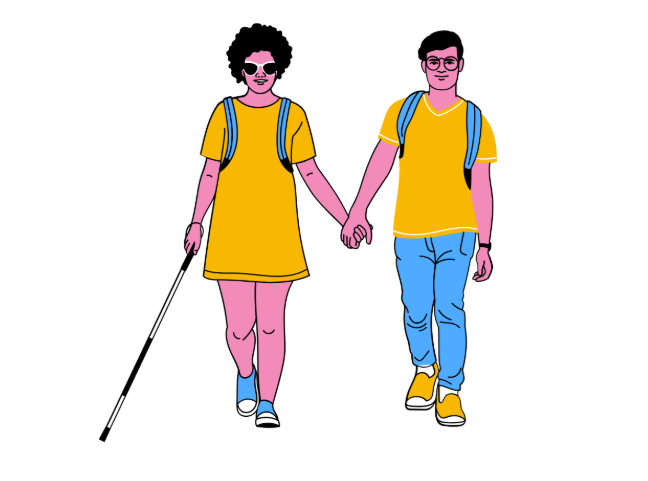
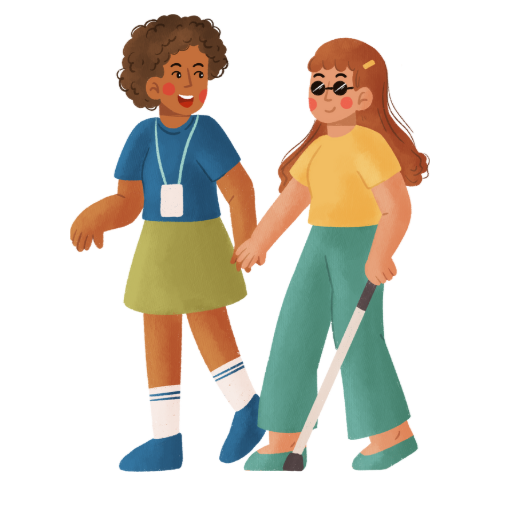
Support is not about leading—it’s about walking together. For blind individuals, meaningful companionship begins with respect, not rescue. Whether you’re a parent, partner, sibling, or friend, your role is not to guide from the front, but to stand beside—listening, adapting, and empowering.
This article explores how to support blind loved ones with dignity, offering practical tools and mindsets that foster inclusive relationships rooted in trust and shared agency.
Respect Begins with Language
Words shape perception. Phrases like “suffers from blindness” or “confined to darkness” reinforce outdated narratives of pity. Instead, use language that affirms identity and autonomy—such as “blind person” or “person who is blind,” depending on individual preference.
The Royal National Institute of Blind People (RNIB, 2022) emphasizes that respectful language is foundational to inclusive relationships. It signals that blindness is not a tragedy, but a lived reality deserving of dignity.
Action Tip: Ask your loved one how they prefer to be described. Respect their choice and model inclusive language in conversations with others.
Empowerment Over Assistance
Support should never eclipse autonomy. Blind individuals often face overprotection, which can unintentionally limit growth and confidence. Whether it’s navigating a space or making decisions, offer help only when asked—and trust their ability to lead.
According to the American Council of the Blind (2023), blind individuals thrive when given space to problem-solve, explore, and assert independence. Companionship becomes empowering when it’s collaborative, not controlling.
Action Tip: Replace “Let me do that for you” with “Would you like help with this?” Respect the answer, even if it’s no.
Inclusive Routines at Home
Home is where inclusion begins. Simple adaptations can make shared spaces more accessible:
- Use tactile markers on appliances and household items.
- Keep furniture placement consistent to support spatial memory.
- Label pantry items with Braille or large print.
These changes aren’t just practical—they communicate care and consideration. They show that your home is a place of belonging, not an exception.
Action Tip: Involve your loved one in decisions about layout, labeling, and routines. Inclusion means co-creating the space together.
Social Inclusion and Shared Joy
Blind individuals, like anyone else, want to be part of laughter, games, and spontaneous moments. Yet visual-centric activities can unintentionally exclude. Thoughtful companions adapt experiences:
- Describe visual scenes naturally and conversationally.
- Choose games that rely on sound, touch, or storytelling.
- Include blind friends in photo sharing by narrating images or using alt text.
The Lighthouse Guild (2021) notes that social inclusion is key to emotional well-being. It affirms that blind individuals are not guests in your life—they’re co-authors of shared joy.
Action Tip: Ask, “How can we make this fun for both of us?” Inclusion is a creative act.
Emotional Support Without Pity
Blindness may come with emotional challenges—especially in a world that often misunderstands it. But support is not about pity; it’s about presence. Listen without rushing to fix. Validate feelings without framing them as weakness.
As blind psychologist Dr. Sheri Wells-Jensen (2020) writes, “Blindness is not the hard part. The hard part is being underestimated.” Emotional support means believing in your loved one’s strength, even when the world doesn’t.
Action Tip: Celebrate achievements without exceptionalism. Affirm effort, growth, and character—not just the fact that they did it “without sight.”
Conclusion
True support for blind loved ones begins not with grand gestures, but with everyday choices rooted in respect. It’s found in the words we use, the space we share, and the trust we offer. When we shift from rescuing to relating, from assuming to asking, we create relationships built on dignity and mutual empowerment.
Supporting a blind person isn’t about seeing for them—it’s about seeing with them. It’s about co-creating a world where autonomy is honored, joy is shared, and inclusion is second nature. When we walk beside our blind loved ones—listening, learning, and celebrating—we don’t just support them. We grow with them.
References
American Council of the Blind. (2023). Empowering independence: A guide for families and allies. https://www.acb.org/empowering-independence-guide
Lighthouse Guild. (2021). Social inclusion and mental health in blind communities. https://www.lighthouseguild.org/social-inclusion-mental-health/
RNIB. (2022). Inclusive language and respectful communication. https://www.rnib.org.uk/inclusive-language-guide
Wells-Jensen, S. (2020). Blindness and underestimated potential. Journal of Inclusive Psychology, 12(3), 45–52.